
A Resolution I Hope You Make This Year
One resolution I hope you make this year and a story about the only American missionary to ever be featured on a postage stamp.


In the years leading up to 1930, Frank Laubach was at a crossroads in his life.
Nothing, it seemed, was working out as he planned since moving to the Philippines almost two decades earlier. He missed out on the opportunity to be president of the local university by a single vote (his own). He lost children to malaria. His wife, and the only son they had left, were hundreds of miles away in Manila.
Now, he’s living alone in Mindanao, struggling to figure out how to move forward with a people group called the Moros, and it feels like his spiritual life is nowhere close to where it should be. He’s actively wondering what he should do next.
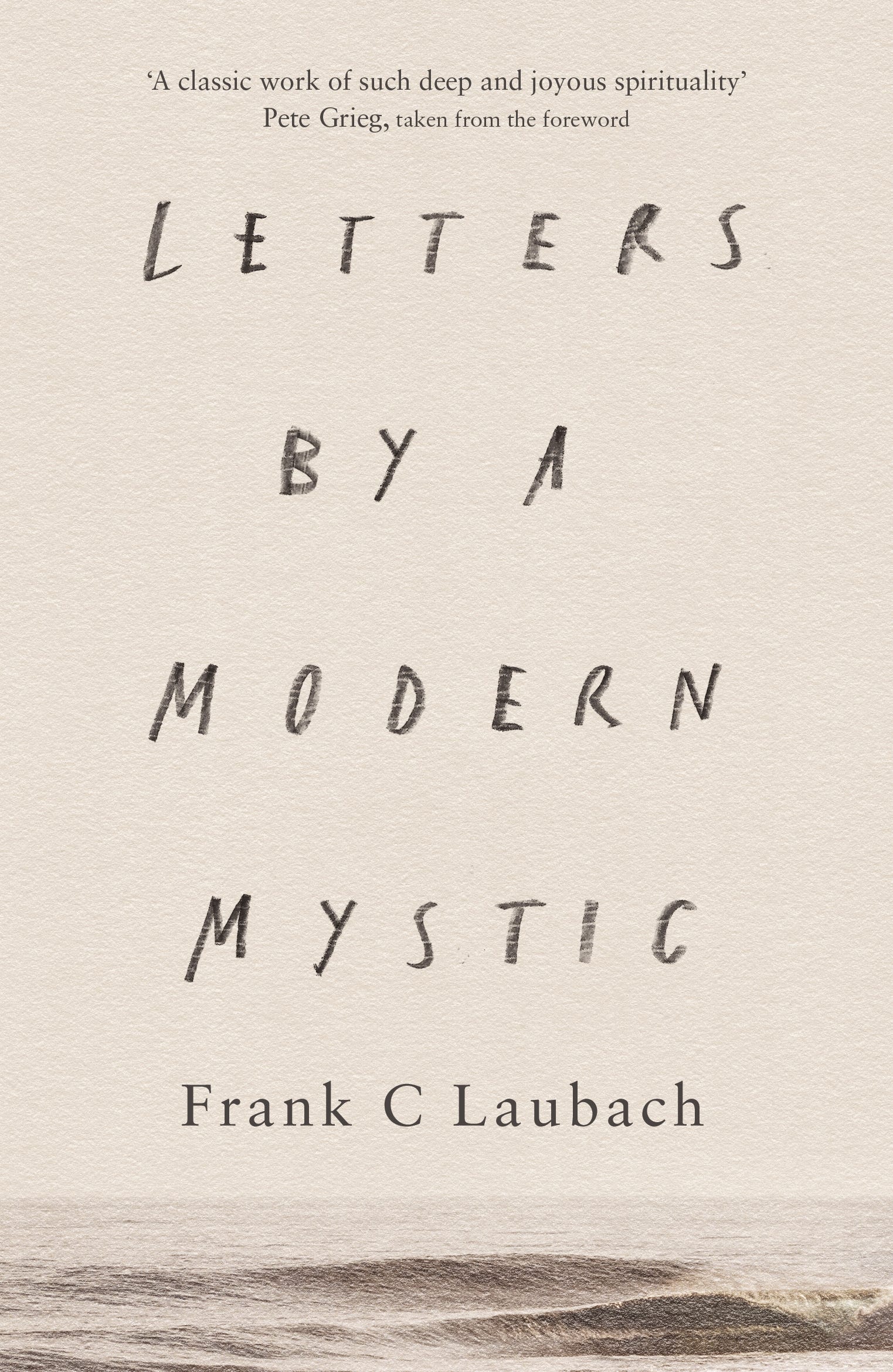
That’s when, at the lowest point in his story so far, he hikes up Signal Hill near where he lived and begins an experiment that will change the course of life—and, not just his own life, but the thousands upon thousands of lives that his life would impact. It’s an experiment that, after quietly beginning to practice on his own during one of the “lonesomest” and “hardest” years of life, he began to share more about in a series of letters written to his father starting on January 3, 1930 called Letters by a Modern Mystic.
What was the experiment?
It’s an experiment that has everything to do with avoiding the biggest mistake that people make when they want to hear from God about the decisions that matter most—a mistake you might be tempted to make once you finish this series. But, it’s a mistake you can avoid with one simple (but strenuous) resolution this year.
When You Limit Your Relationship with God to Big Decisions
It’s possible that you started reading this email series, Hear From God in Forty Emails (or Less), because you had a big decision on your mind. You were trying to figure out what to do for work, how to get through a relational challenge, where you should live, where to go to church, or something else.
And, maybe, you’ve heard from God—or, at the very least, you’ve made a decision about what to do next whether or not you feel like you’ve heard from him about what you should do next. The decision is in the rearview mirror, and you’re walking forward with trust and trying your best to obey.

The problem is that, once the decision has been made, you often quit listening for God’s guidance until the next big decision. Your relationship with him is limited to the intense decision-making moments of your life, and that’s it. You still have his number, of course, and you’ll call him again when you need him. Until then, though, you’ve got this.
David Benner, a Canadian psychologist working at the intersection of psychology and spirituality, says that we all have a tendency to limit the search for God’s will to major decisions in our lives.1 “So if a person had already settled into a job, chosen a husband or wife, or wasn’t facing an obvious decision whether or not to sin,” Benner writes, “God’s will receded into the background.”2 If God is nothing more than a useful guide through the decisions that matter most, you’re free to move on once the decision is made.
For much of my late teenage years through early young adulthood, this was me.
My relationship with God was full of activity as I moved through the stages of a big decision, but my relationship receded into the background once the decision was made. I barely noticed, though, because, as clinical psychologist Meg Jay points out in The Defining Decade, that stage of life is nothing more than one decision after another, which meant that I kept coming back to God again and again.3
But, eventually, most of the decisions dry up for a while—at least until you transition into middle or late adulthood. And, as a result, so can your relationship with God, which is what was beginning to happen to my own.
It was then, though, that I began to discover what so many before me have also discovered: that God doesn’t just want to talk with you when you’re making big decisions. God wants what Dallas Willard calls a “conversational relationship” with you.4 Of course, this doesn’t mean that God is a helicopter God always telling you what to do, but like any parent, he longs for a relationship with you that goes beyond seasons of guidance.
Moving Beyond the H.E.A.R. Framework
What could an ongoing conversational relationship with God look like—one that’s not contained to desperate moments of decision-making?
That’s what Frank Laubach wanted to find out in his experiment, an experiment he eventually called his “game with minutes.” It’s an experiment that a monk named Brother Lawrence had tried centuries earlier, as recounted in The Practice of the Presence of God.
Frank Laubach, like Brother Lawrence before him, wanted to see what could happen if he invited God into everything he did. His goal was every minute of every day, and he “gamified” it long before that terminology existed. In his own words, here’s how he summarized the experiment in a letter from January 29, 1930, “My part is to live this hour in continuous inner conversation with God and in perfect responsiveness to His will, to make this hour gloriously rich.”5
It was challenging at first, but the more he practiced, the easier it got. Eventually, it became intuitive, as automatic as breathing. He was no longer just listening for God’s voice when he had major decisions to make, he was talking with God throughout each minute of the day.
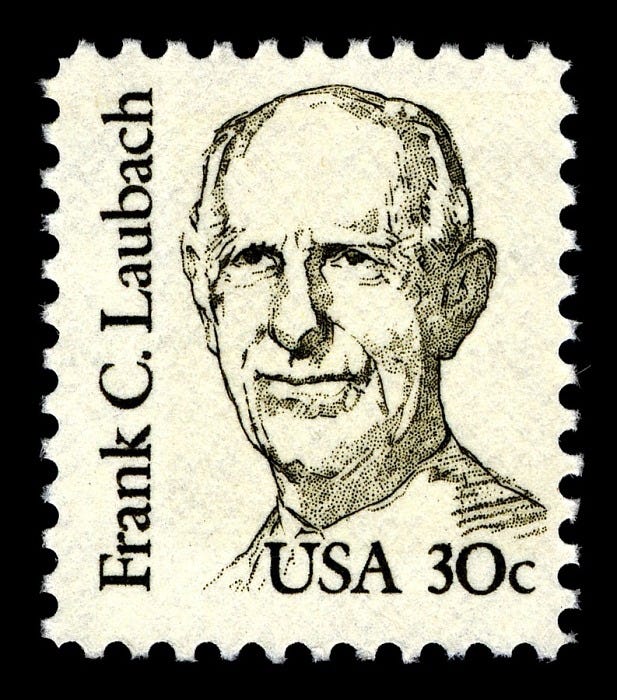
And, he kept that conversation with God going for the rest of his life. As he did so, he developed a literacy system that taught hundreds of thousands of people to read, and he was even featured on an American postage stamp. (You can read his obituary in The New York Times here.)
When I read his letters shortly after college, I began to experiment with it in my own life and discovered a deeper relationship with God than I had previously experienced. It was a relationship that was no longer dependent on a decision I needed to make. While it’s still easy to let my relationship with God recede into the background when I’ve “settled into” my life a bit (as David Benner says), I’m no longer content to just reserve God for when it’s time to make a big decision.
As you prepare to close out this series with a new year right around the corner, I encourage you to try the same. Make a resolution, like Frank Laubach wrote on January 3, 1930, nearly one hundred years ago, “As for me, I resolved that I would succeed better this year with the experiment of filling every minute full of the thought of God than I succeeded last year.”6
Resolve to not wait until your next big decision to talk with God. Resolve to talk with him and listen for his voice as part of your daily life. Keep a journal about it or, like Laubach, write some letters. Gamify it if you must. Whatever you do, move beyond the H.E.A.R. Framework into a life of hearing God. You’ll never look back.
I can’t wait to hear what happens.
P.S. Here’s a roundtable discussion that Dallas Willard, Richard Foster, and John Ortberg had about the enduring influence of Frank Laubach.
This is email 39 out of 40 in Hear from God in 40 Emails (or Less)—a Substack series designed to give you biblical and practical guidance on hearing from God in a decision that matters to you. Read this email for how to get caught up in just seven emails.
David Benner, Opening to God, 14.
David Benner, Opening to God, 57.
Meg Jay, The Defining Decade, xii. I write more about this in my book A Restless Age.
Dallas Willard, Hearing God, 75.
Frank Laubach, Letters by a Modern Mystic.
Frank Laubach, Letters by a Modern Mystic, 2.