
How to Build a Better Reading List
Get your recommendations from people not soul-less algorithms (and four rules that will help you get out of a reading rut).

Austin Kleon, who writes one of the first Substacks I ever subscribed to, shared about Dan Pelzer in one his Friday lists of things worth sharing. Dan Pelzer started reading through the library of 150 paperbacks provided to Peace Corps volunteers in 1962. Then, for the rest of his life, he kept a reading log of every book he read—completing something like 3,000 books over the rest of his life.
You can read Dan Pelzer’s whole list here.
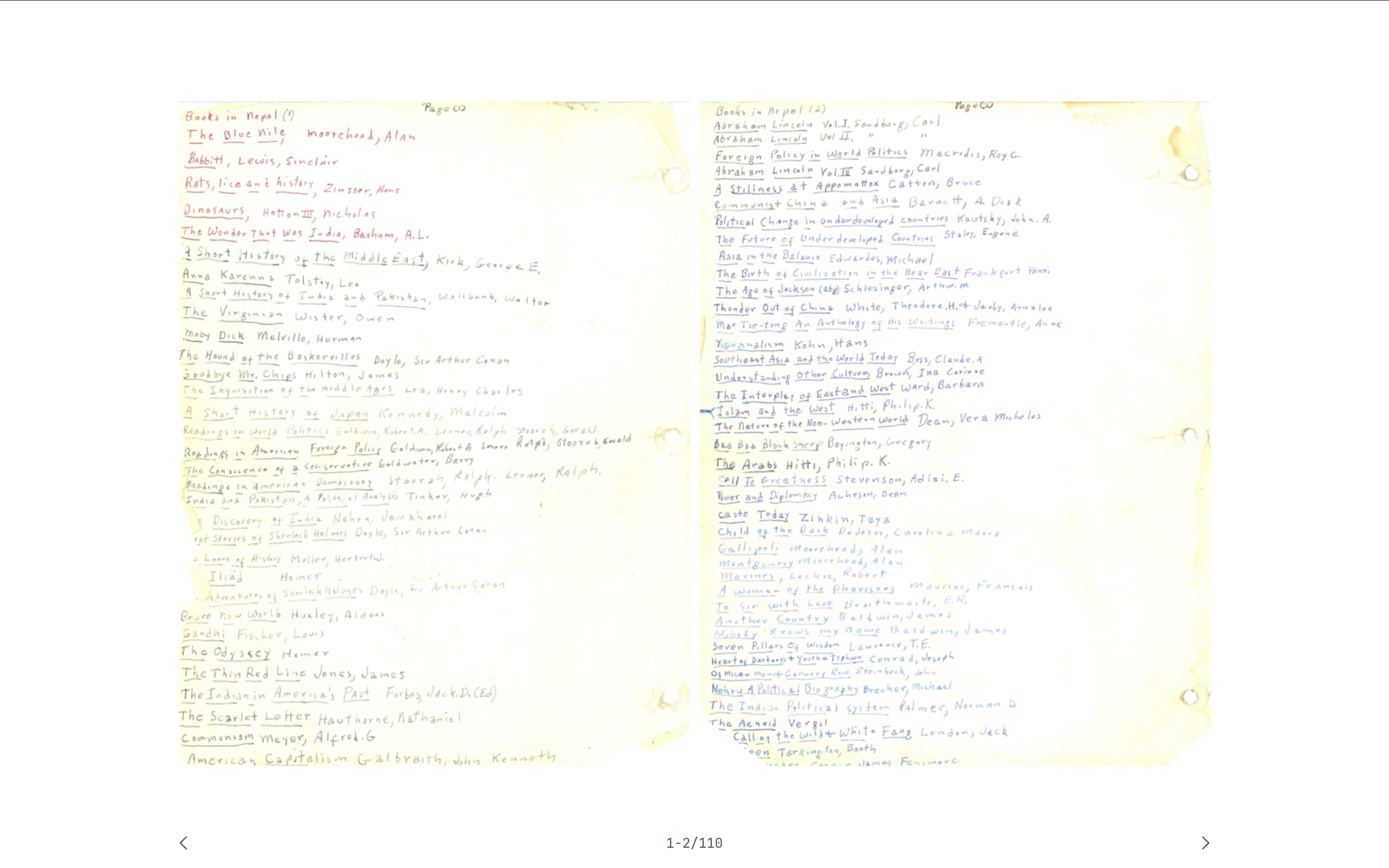
As I was reading through his list, it made me realize: You have a limited number of books that you will actually have time to read.
That’s one reason I recommend building a READING LIST each year, which is nothing more than a list of books you plan to read this year. Instead of simply logging the books that you read, list the books you want to read.
As someone who has been building reading lists for the past few years that have helped me read hundreds of books (even if they weren’t all worth reading), I want to share five practices with you that might help you build a better reading list of your own—including the four rules that helped me get out of a reading rut.
1) Get Most Book Recommendations from People, not Algorithms
How did you first hear about the book you’re reading right now?
For example, I’m reading the first book in the Wingfeather Saga at the moment. I first heard about it from some other parents I know. Eventually, I bought it from a used bookstore for my oldest son and, recently, he said to me, “Dad, you should read this, too.” It was my son’s recommendation that got it into my hands.
When it comes to book recommendations, I find it wise to prioritize recommendations from actual people (and more than one person). While some books are simply picked up after seeing them on the shelf at the bookstore and others because my soul-less algorithm told me I might like this one next, most books that I end up reading came to me by way of recommendation from actual people.
For example, here are just four ways I tend to discover my next read:
Asking, “What are you reading?” I’ll often ask people in my life what they’re reading right now or what they’ve read recently. Sometimes, I’ll toss that question out to a group text and crowdsource book recommendations from people I trust.
End-of-Year Lists. One of my favorite things about Substack is that lots of people make end-of-year lists of book recommendations. But, you can also usually find lists in places like The New York Times, The Atlantic, Christianity Today, or whatever magazine you read.
Book Recommendation Newsletters. Byron Borger, who runs a bookstore called Hearts and Minds, writes a legendary book recommendation email that I get in my inbox. (He’s also the only physical bookstore I know of that carries and promotes copies of my first book A Restless Age.)
Podcasts. It’s no secret that many of the people doing podcast interviews are promoting their newest book. Sometimes, after listening to someone talk about their book, I’ll add it to my list—and, sometimes, I find out that everything interesting in the book was in the interview.
In general, if I hear about a book from three different sources (like those listed above), I’ll add it to my list. (That’s how I ended up reading Paul Kingsnorth’s Against the Machine last year.)
If you want some other ideas, I asked people on Substack, a platform that’s full of readers, how they discover what books they read and here are what two people had to say:
Zack Armfield: “Continuing through known and loved authors’ works, 2) reading books that THEY read, 3) friends, 4) random news of new books from publishing orgs I like.”
Kiersten D: “I usually read everything (old and new works) from favorite authors. Most of my favorite, currently living authors are all interconnected somehow, so I find out about new books via podcasts or instagram. I also make a point to read a book if it’s recommended to me by a trusted voice (college professors/mentors, leadership coach, my preacher-dad, my best friend).”
If you’re looking for some reading recommendations, here’s a list of ten books I enjoyed last year (out of the 45 I read), a list of five books I recommend on hearing God, a list of books and resources I made for our church (including the five books I recommend people start with), and if you subscribe to my Everyday Institute Substack, you’ll get an email with 21 books that will accelerate discipleship every single day.

2) Start a Backburner Booklist
Scott Belsky, in his book on project management called Making Things Happens, says that you need to keep a “backburner” of projects that aren’t actionable right now but might be one day.
That’s also true of books.
Every time you hear about a book, you can’t just stop what you’re currently reading and start reading it. I mean, you could, but you’ll never finish a book and your life will be littered with abandoned books.
That’s why you need a BACKBURNER BOOKLIST. A backburner booklist is a list of books you might want to read someday but can’t right now. It gets your list out of your brain and ensures you’ll never have a shortage of books to read.
You might keep your backburner booklist in a document on your computer, a note on your phone, an actual notebook, a wishlist on a website, or just in your brain. (Most books often start with a note in my pocket notebook before being transferred to a digital list.)
Periodically, when you’re wondering what to read next, start with your backburner booklist, scroll through it, and take note of any books it might be time to read.

In addition to helping me remember books that I might want to read, I’ve also discovered that a backburner booklist helps me save money on books and find out which books age well. When I’m at my local thrift store, Half-Price Books, or another used bookstore, I have my backburner booklist in mind and often I’ll find a book that’s been on my list for much cheaper than the cost of buying new.
Also, by not purchasing a book the moment I first hear about it, it gives me time to find out if that book, especially if it’s recently published, is going to age like fine wine or get stale like fresh bread. As someone who worked in a used bookstore, I am well aware that despite the popularity of a book at the moment, that popularity often fades over time.
3) Keep These Four Rules for Reading Lists in Mind
Starting with my backburner booklist, I make a reading list each quarter of books I actually plan to read. In general, when building my reading list, I try to keep four rules in mind.
Read Widely.
In Range: Why Generalists Triumph in a Specialized World, David Epstein (who is also on Substack) says that the world needs more people who refuse to specialize only in one subject. Serial innovators, like Thomas Edison, were people who didn’t just stay in their reading lane. By learning across a variety of disciplines, especially through reading, they tend to develop what Epstein calls a “mental Swiss Army knife.”1
That’s why, on my own reading list, I try to pick books that fit into a range of different categories—at least one book in each of the following: biography / history, social sciences / science, devotional literature, Bible / theology, practical leadership, and fiction. I’ve often found that my best insights come at the intersection of different kinds of reading.
Kiersten D. said it this way when I asked readers on Substack how they pick books, “I do have to make myself break up the genres I am reading. I can very easily get in a rhythm of only reading memoir or fiction or spiritual formation or theology. And so if I noticed I have read four or five of the same genre in a row, I will make myself read something different for a book or two.”
That’s a good practice.
Read Deeply.

If you think of different reading topics like a pool, most of the time you never get out of the shallow end. You read one book on a subject and move on. But, pools are the most fun when you learn how to swim in the deep end.
Each quarter, I try to do a “deep dive” into one subject. It’s usually something that’s on my mind or something related to an upcoming project. For my deep dive, instead of just one book on the topic, I try to read at least three books deep into the topic (which, admittedly, is still the shallow end). Sometimes, I know of only one book on the subject and I’ll discover the other books to read in the sources of that book. Other times, I’ll ask someone who knows more about that subject to recommend some books to me.
For example, I’ve never seen myself as much of a fundraiser, but I’m in a position right now and a season of leadership that requires me to do some fundraising. In addition to asking lots of questions to people I know who are good fundraisers, I’m reading three books deep into fundraising as a starting point. I’m not out of the kiddie pool, yet, but I’m on my way there.
Usually, after my deep dive, I’ll make a digital note of key insights across my reading that I can keep in mind for the future. (For more on what I do after I read a book, look for my next post in two weeks.)
Read Classically.
C.S. Lewis, English literature professor at Oxford and author of The Chronicles of Narnia, once wrote an introduction to an old book. In the introduction, Lewis says, “It’s a good rule, after reading a new book, never to allow yourself another new one till you have read an old one in between. If that is too much for you, you should at least read one old one to every three new ones.”2 Doing so increases what Alan Jacobs calls your “temporal bandwidth” in Breaking Bread with the Dead.3

In general, I try to read at least one book each quarter that has been around for more than twenty years. For example, at the moment, I’m reading a book that I remember my parents reading when I was a kid that’s still popular today. Usually, I’ll read a book that’s much older than that, but even twenty years can count as a classic for me.
Read Diversely.
A few years ago, I took a look at my bookshelf and I realized something: 95% of the books I read are written by people who look like me. When almost the entirety of your reading life is books by people like you, it can be easy to get stuck in a perspective.
As I finalize my reading list for the quarter, I try to consider if there are any books on my list written by people of a different gender than me, people from different ethnic backgrounds than me, or people who believe differently than I do.
4) Read “Less But Better”
A few years ago, I met someone who tried to read 100 books in a year. I asked her, “How did it go?” She accomplished the feat, but she said something to the effect of, “Never again.” Unless you’re a professional reader, it’s just too many books.
In Essentialism, Greg McKeown introduced me to the phrase, “less but better.” You will always have more books you want to read than time to read them, and the temptation for readers will often be to simply get through as many books as you can.
Choose to be a reading essentialist who reads less but better. Yes, keep the four rules for reading lists in mind, but put some constraints on how much you read. It will force you to choose better books.
For example, I try to read about 48 books a year—which breaks down to twelve books each quarter, four books each month, or a little less than a book each week. When I finalize my reading list for the quarter, I try to limit it to twelve. That constraint forces me to be pickier about what I spend my time reading.
If you’re wondering where to start, start with just twelve books a year or one each month. Most people, even busy parents, can make time for that.
5) Leave Room for Spontaneity
Finally, remember that a reading list at its best is still a draft. It’s a plan that will help you read more, but it’s written in pencil (or pixels) that can and should be changed.
Leave room for books you discover along the way that you want to read. Often, I end each quarter having read about twelve books but my reading list only had six books on it when I started. The rest of the books came along the way.
Quit books that aren’t worth finishing—no matter how many people recommended them to you. I’m the worst at quitting books, but you have no obligation to finish a book. As I learned in one book I didn’t finish (not because it wasn’t worth it but because I just needed a break) don’t give into “sunk cost fallacy,” which is the tendency to think that because you’ve already invested time into something you have to keep investing time into it even though it’s clearly not worth it.4
—
Get most book recommendations from people, not algorithms. Keep a backburner booklist. Read widely, deeply, classically, and diversely. Read “less but better.” And, finally, leave room for spontaneity.
I’d love to hear from you in the comments: How do you pick which books to read, and what’s a book on your reading list right now?
P.S. If you’re looking for a book to read and you’re a young adult, I wrote a book for you called A Restless Age. As I was nearing the end of young adulthood, I wrote the book I wish I had when I was a young adult. It’s about Saint Augustine and the five searches that every young adult is on. I’d love to see it on one of your top-ten lists next year, and if you hate it, tell no one.
David Epstein, Range, 50.
C.S. Lewis, “Introduction to Athanasius’ On the Incarnation.”
Alan Jacobs, Breaking Bread with the Dead, 23.
The book I didn’t finish this year was Thinking Fast and Slow.
One idea I heard a few years ago that I’ve implemented is have a core list of books that you return to over and over. That actually has been really fun for me.
One of the best things I've learned is when to put a book down. Either from my inability to understand it at the moment or it's simply not good.