
Biblical Operating Systems (OS)
The “Beth Moore Bible Reading Strategy,” the I.M.M.E.R.S.E. method of reading Scripture from my friend Dave Ripper, and some nostalgia for Windows 95.

As part of HEAR FROM GOD IN 40 EMAILS (OR LESS), we’re in a four-part series on God’s guidance through your READING the Bible—the “R” in the H.E.A.R. Framework. Read Part 1 about three of the ways that God guides through reading the Bible.
I grew up with a Gateway computer that had a Windows ‘95 operating system.
There was a program called Microsoft Paint where I could live out my artistic dreams. I could play games like minesweeper and solitaire. I learned to type with a typing software our family installed. It had a place to insert a floppy disk so I could play my favorite games.
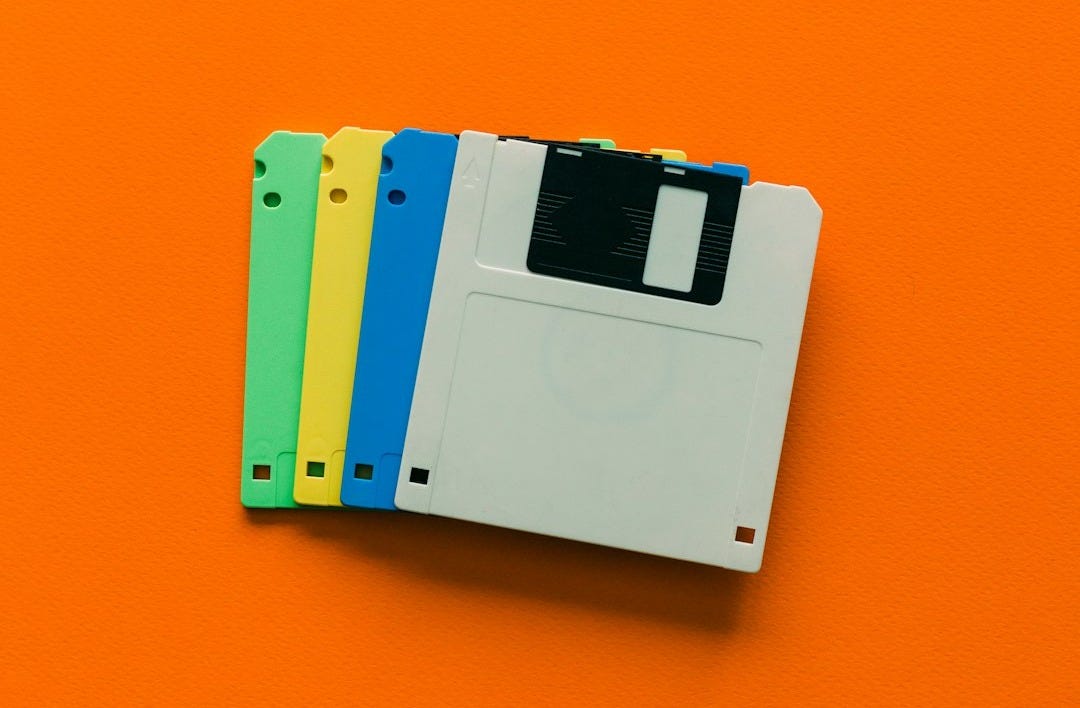
I went through a few different Microsoft operating systems, but when I got to college, I made the switch. I used all my graduation money to buy my first Macbook with its own operating system (and I loved it). Goodbye Microsoft Paint and mineseeper, hello iMovie and Garageband.
That’s been my operating system just about ever since.
You also have an Operating System at work in your life, and in this newsletter, we’re going to explore how to build a Biblical Operating System (OS) that’s ready to kick in when you’re making the decisions that matter most. While the best time to start building a Biblical OS was before you are facing a big decision, the second best time is right in the middle of one.
Your Default OS Probably Isn’t Biblical
Whenever you’re facing a decision, your default operating system is going to kick in, which is why it’s critical to ensure that you have a well-functioning Biblical Operating System (OS) running in the background of your life.
A BIBLICAL OPERATING SYSTEM (OS) is an automatic baseline approach, shaped by the storyline of the Bible, for interacting with the world around you. It’s the stories, verses, characters, and principles from the Bible that you’ve “hidden in your heart” (Psalm 119:11) and factor into whatever decision you’re facing. It’s not about having perfect “chapter and verse” biblical recall, it’s about getting the Bible into your bones.
The problem is that you’re not born with a Biblical OS. It has to be built over time to replace whatever operating system you’ve developed through your family and culture. One will lead you to doing what makes you happy, the other will lead you to doing what makes you holy.
Paul says it this way in Romans 12:2, “Do not be conformed to this age, but be transformed by the renewing of your mind, so that you may discern what is the good, pleasing, and perfect will of God.”
Most of the time, Paul says, all you need to “discern … the will of God” is a mind that has been renewed through the Holy Spirit as you immerse yourself in God’s Word. In other words, for most of your decisions, a well-functioning Biblical OS is probably all you need in order to move forward.
How to Build a Biblical OS One Day at a Time
How do you build a Biblical Operating System (OS)? You can’t build a Biblical OS in a day, but you can build it one day at a time over decades. Every time you open your Bible, you are upgrading your Biblical OS so that it runs a little bit more effectively and you can make good decisions more intuitively. Here’s two steps you can take that will help you build a Biblical OS.
1) Read or listen to the Bible daily.
Repeated exposure to the Bible, even if you’re doing nothing but reading or listening to it, is the first step you can take toward building a Biblical OS.
I was a freshman in college when I started reading the Bible daily.
A mentor of mine encouraged us to start a habit of Bible reading, but the Bible felt overwhelming and I didn’t know where to start. He said, “There are thirty-one chapters in Proverbs and there are thirty-one days in most months. Whatever day of the month it is, read that chapter of Proverbs. That should get you started.”
It was the 17th day of the month, so I opened my Bible to Proverbs 17 and started reading. I’ve been reading the Bible ever since. Eventually, I found a plan beyond just reading the book of Proverbs that worked for me. Even if I don’t always get to the Bible daily, that’s the target I shoot for.
If you’re not sure where to start, you could start with Proverbs like I did as a college freshman or you could download the YouVersion Bible app and explore a few of the plans that are built right into the app.

Here are a three of my favorite one-year plans:
The M’Cheyne Bible Reading Plan: This is a classic Bible reading plan that’s designed to get you through the Old Testament once and the New Testament and Psalms twice every single year. The pace of it can feel a bit too fast, especially if you start getting behind, but it’s a good plan to get you reading the Bible regularly. It’s what I started with after I was in the habit of reading Proverbs daily.
The Bible in One Year with Nicky and Pippa Gumbel: Our church runs something called Alpha—a program that creates space for people to explore faith. After the session about the Bible, we often encourage people to try a plan created by Nicky and Pippa Gumbel. There are daily readings and a devotional that will keep you coming back for more. (They also have a 30-Day overview of the Bible reading plan that might be a good place to start.)
The Bible Project Reading Plan: The Bible Project has created hundreds of animated videos that explain what the Bible is all about, and they have also created Bible reading plans that are integrated with their videos. You can find those plans on their website, through the YouVersion app, or by downloading an app called Read Scripture.
If you don’t like the idea of a plan, you can always try what I call the “Beth Moore Bible Reading Strategy.”1 She shared once that one way she reads the Bible is simply by slowly working her way through a book of the Bible. Then, when she’s finished with that book, she’ll turn to the table of contents and ask God what to read next. After she’s read through the whole Bible that way, she’ll do it again but with a different translation. (That’s my current Bible reading plan.)
Or, you might be in a tradition that follows the Daily Office Lectionary. I grew up in a church tradition that didn’t have a resource like this, but I went through a season, as part of the seminary I attended, doing something called Morning and Evening Prayer—a practice that included readings from the lectionary. If you’re in a tradition like that, start there!
2) Read or listen to the Bible deeply.
While simply reading or listening to the Bible daily will do more for you than not reading it all, the true work of building a Biblical Operating Systems happens in deep reading of the Bible.
Dallas Willard points out that there are many people who read the Bible daily who don’t make much progress spiritually. You could read through the Bible over and over again every year and still not be changed. Then, he says, in of the top ten quotes that have changed my life, “It is better in one year to have ten good verses transferred into the substance of our lives than to have every word of the Bible flash before our eyes.”2
How do you do that? By reading the Bible deeply.
In Psalm 1, it says, “How happy is the one who does not walk in the advice of the wicked or stand in the pathway with sinners or sit in the company of mockers! Instead, his delight is in the LORD’s instruction, and he meditates on it day and night” (Psalm 1:1-2). It’s not just about reading the Bible day and night, it’s about meditating on it.
In Eat This Book, Eugene Peterson points out that the word for “meditate” in Psalm 1:2 is the same word that shows up in Isaiah 31:4 to describe a lion growling over its prey.3 If you’re “meditating” on the Bible, think of yourself like a lion with its prey—trying to get every last morsel of meat off the bone and into your body.

Reading the Bible deeply, like a lion with its prey, in a way that gets the Bible into the substance of your life might be new to you. For many people, it might be as simple as reading the Bible and diving deeper into a few verses with a journal like as well as beginning to memorize a few verses and passages. (That’s what I do.)
Or, if it’s helpful, my friend Dave Ripper, who shares my love of a good acronym, recently articulated something called the I.M.M.E.R.S.E. method in Experiencing Scripture as a Disciple of Jesus that’s based on the advice of Dallas Willard:
Immersion
Meditation
Memorization
Encounter
Response
Supplication
Experience
If you want a thirty-minute explanation of the I.M.M.E.R.S.E. Method, you can listen to him unpack it here using Matthew 11:28-30. That’s one of many ways to read the Bible deeply as part of reading the Bible daily, and we’ll explore some other ways you can do that in the next newsletter.
Biblical OS and the Decisions That Matter Most
If you’re already in the habit of reading the Bible daily and deeply, you’ll often discover that, as decisions arise in your life, your Biblical OS will kick in before you even realize it. In fact, for most of your daily decisions, your Biblical OS—on its own—will provide you with enough wisdom to move forward with one of the options.
Even as you approach the decisions that matter most, your Biblical OS will likely provide you with some helpful guidance even before you read your Bible through the lens of whatever choice you’re facing. That’s why, in Dallas Willard’s guidance on hearing God, he says that one of the main steps you need to take is to “meditate constantly on God’s principles for life as set forth in the Scriptures.”
With that in mind, based on what you’ve already read in the Bible up to this point, you can ask yourself (and invite the Holy Spirit to remind you):
Are there any biblical principles that come to mind?
Are there any biblical stories or characters that come to mind?
Are there any specific verses that come to mind?
If some principles, stories, characters, or verses come to mind that feel like they might be relevant to the decision you’re facing, take note of them in your H.E.A.R. Framework even if you’re not sure what to do with them yet.

I’d love to hear from you: Do you have any tips for starting or maintaining a habit of reading or listening to the Bible?
—
P.S. I’ve created a series of courses called Everyday Institute that are designed to make it simple for people, churches, and ministries to accelerate discipleship every single day. In the Everyday Habits course, there’s a whole unit dedicated to starting a habit of reading the Bible. If you want to start that habit, sign up for the course and skip the unit on the Bible. It’s 100% free. I just led 30+ people through the course and many of them started a habit of reading the Bible for the first-time.
This is email 33 out of 40 in Hear from God in 40 Emails (or Less)—a Substack series designed to give you biblical and practical guidance on hearing from God in a decision that matters to you. Read this email for how to get caught up in just seven emails.
By the way, if you’ve found this email helpful, would you forward it to a friend and invite them to check out the series?
Anyone who knows me knows that I’m a big fan of Beth Moore. If you want to know why, you can read a viral essay I wrote for Fathom Mag called “Me, My Mom, and Beth Moore.”
Dallas Willard, Hearing God, 212.
Eugene Peterson, Eat This Book.