
Is Your Bible Open or Closed?
Why Dallas Willard calls the Bible "the permanent address of the Word of God," hearing God in the wild, and the time that opening the Bible to a random page changed someone's life forever

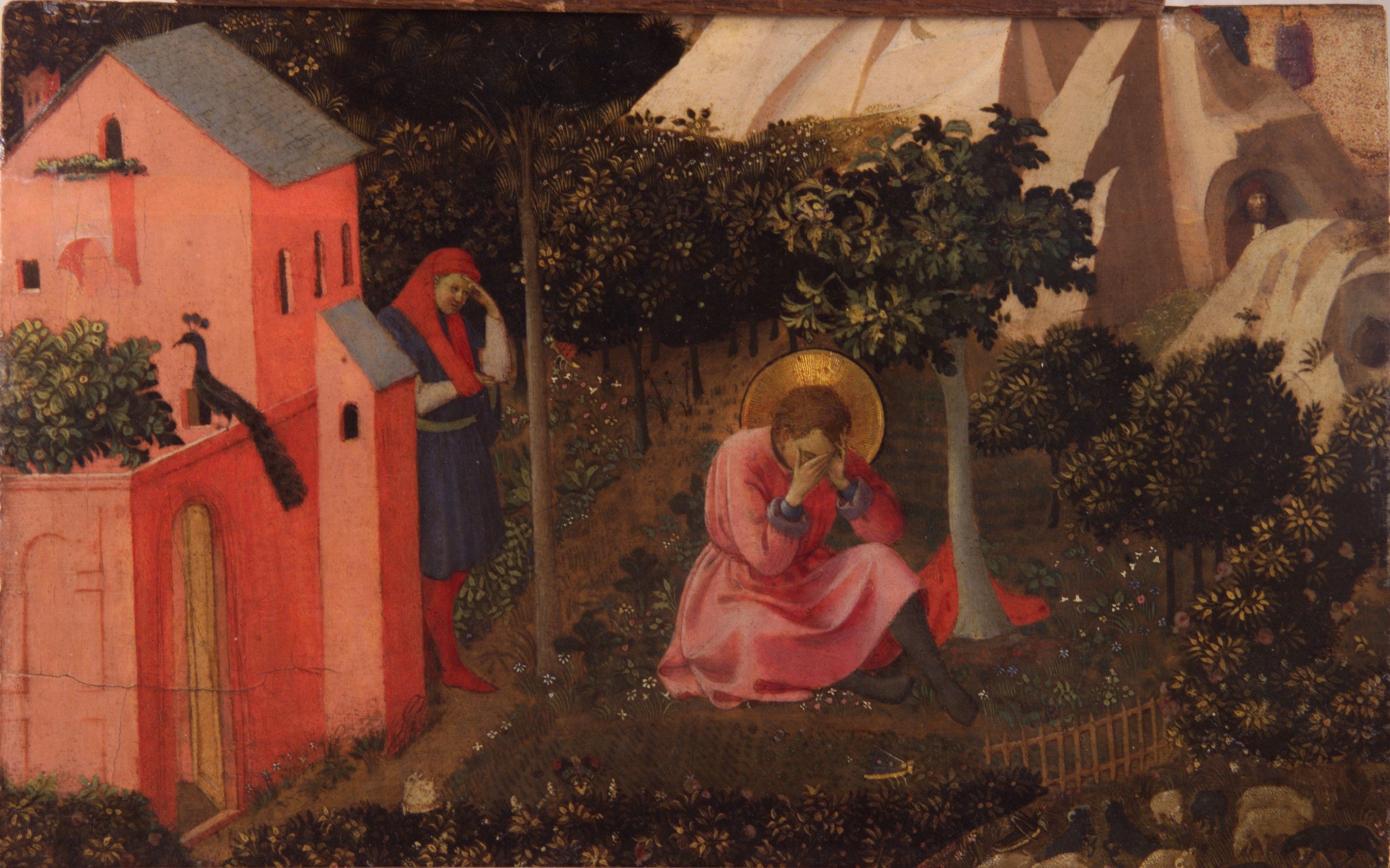
Gus was in the middle of a moment that had all the marks of a mental breakdown when he heard a voice that changed the course of his life.
He was in his early thirties, but his twenties had taken its toll on him. He had been through an awful breakup, escaped a popular cult, struggled with debilitating anxiety, and felt stuck in destructive patterns that were ruining his life.
Not only that, Gus was beginning to consider the possibility that Christianity might be true, but something was holding him back from making a final decision about it.
It was all too much to bear, and it finally spilled over after a conversation with one of his best friends. As he remembers it, he broke down and ugly cried under a tree near the house.
That’s when he heard a voice that changed the course of his life.
It was saying, “Pick it up. Read it.”
Where is that voice coming from?, he thought. At first, he thought it sounded like some little kids who were playing some sort of game that he had never heard of. Or, maybe, he was starting to lose his mind. But, he kept hearing the phrase again and again and couldn’t help but wonder: Could it be God?
So, after working through his own internal chatter, Gus gets himself together and walks inside, and he does the only thing he can think to do. He finds the nearest book, a copy of Paul’s letters he had been reading earlier, and opens it up to a random page. Then, he starts reading.
It’s Romans 13:13-14, “Let us walk with decency, as in the daytime: not in carousing and drunkenness; not in sexual impurity and promiscuity; not in quarreling and jealousy. But put on the Lord Jesus Christ, and make no provision for the flesh to gratify its desires.”
Enough said.
In his memoir, here’s how he explains what happens next: “I didn’t want to read any further, and there was no need. The instant I finished the sentence, my heart was virtually flooded with a light of relief and certitude, and all the darkness of my hesitation scattered away.” It was clear, after this moment of reading the Bible, that he was ready to follow Jesus and leave his old life behind him.
The first person he told was his best friend, then his mom.
The rest is history.1
Gus, better known as Saint Augustine of Hippo, became one of the most influential theologians in history—and at least part of his story can be traced back to this moment when he opened up to a random page of the Bible and started reading.
I’m starting a four-part series on the final part of the H.E.A.R. Framework—a simple tool designed to help you discern your next step in the decisions that matter most:
Reading

Reading the Bible changed the course of Augustine’s life, and it might just change yours. But, before you close out of this window and open up to a random page of the Bible, keep reading. In the rest of this email, we’re going to explore the primary role that reading the Bible plays in hearing God’s guidance in the decisions that matter most.
How God Guides Through Reading the Bible
The Bible isn’t the only way God speaks to you, as we explored in a previous email, but it is the primary way God speaks to you. As the writer of Psalm 119 says, “Your word is a lamp for my feet and a light on my path” (Psalm 119:105). If you’re trying to figure out which way to go in the decisions that matter most, there are at least three ways that God can guide you through simply reading the Bible.
1) Reading the Bible sets up guidance guardrails
When you’re learning to bowl, you need bumpers. Why? The lane is narrow, with gutters on both sides, and it’s easy to throw the ball right into the gutter—a feat I have accomplished many times.
Or, when you’re driving on a mountain road, there are always guardrails. Why? Because even the most experienced drivers can lose sight of the road and drive right off of it if they aren’t careful.

As you’re listening for God’s voice through the other parts of the H.E.A.R. Framework, like within your heart or through the wisdom of other people, the Bible operates like bumpers that keep you out of the gutter or guardrails that keep you from driving off course. Reading the Bible is course correction for when you might be about to head in the wrong direction.
“If I look to the Spirit alone without the Word,” George Muller says in his third step for discerning God’s will, “I lay myself open to great delusions also.” I’ve heard more than one story of “great delusions” that can happen when people don’t submit what they think God is saying to what he’s already said.
Reading the Bible is the last part of the H.E.A.R. Framework not because it’s least important but because the Bible gets the final word. The Bible is God’s presidential veto on anything you think he might be saying that’s contrary to what he’s already clearly said.
2) Reading the Bible teaches you divine voice recognition
My children have a book that teaches you common bird sounds and simple ways to remember them. For example, a chickadee says, “chick-a-dee-dee-dee.” Once you learn the sound a chickadee makes, whether through a book like the one my children have or by listening to sound clips in your spare time (if that’s your thing), you’ll be able to recognize it when you hear it in the wild.

That’s what reading the Bible does for God’s voice.
As you read the Bible, you’re learning what God’s voice sounds like. You’re learning its basic sound. The more familiar you are with God’s voice in the Bible, the easier you’ll be able to recognize it when it shows up in the wild—whether through a divine nudge in your heart, the wise advice of a gray-haired yoda, or a prophetic word from a friend.
If you read your Bible often, you’ll be able to identify God’s voice in the wild as easily as an experienced birder can recognize the song of a yellow warbler. Reading the Bible not only helps you filter out what’s not his voice, it attunes you to it.
“We’ll know His voice,” Priscilla Shirer writes, “because it will ‘sound’ like the One we’ve come to know so well in the Scriptures.”2
Remember: God isn’t the only one trying to guide you.
3) Reading the Bible invites God to speak to you
Often, when someone is in a season of discernment and they want to hear from God, one of the first questions I ask is, “Is your Bible open?” If the answer is no, that’s the equivalent of waiting for someone to call while your phone is off or asking for someone’s opinion right before you put on noise-cancelling headphones.
If you’re longing for guidance but aren’t opening the Bible daily, you’re missing out on one of the main ways that God speaks. Yes, God can guide through your heart, experiences, or advice, but Dallas Willard says the “permanent address at which the word of God may be found is the Bible.”3
The God of the Bible is actively speaking through the words of the Bible right into whatever decision you’re facing. As Hebrews 4:12 says, “For the word of God is living and effective and sharper than any double-edged sword, penetrating as far as the separation of soul and spirit, joints and marrow. It is able to judge the thoughts and intentions of the heart.”
Yes, the actual words of the Bible were written thousands of years ago, but they’ll often leap off the page as if God were speaking them directly to you. Reading the Bible, at its best, is an invitation for God to speak afresh to you.
God is Trying to Speak to You Through the Bible—If You’ll Listen
I was recently speaking with a new friend who had an experience like Saint Augustine.
He was in a season of his life when he was on his way back into faith after walking away from it, and for a stretch of time, he woke up every morning with the word “Ecclesiastes” on his mind—for no reason.
Just every morning for six weeks: “Ecclesiastes.”
That’s it.
It kept happening until one day he decided to do something about it. He found a Bible and started reading the book of Ecclesiastes and, through his reading of Ecclesiastes, it felt like God was naming so much of what he had been feeling. Before long, God guided him right back into faith.
That’s just one story of many that can be told about how God guides people simply through reading the Bible, and I can’t wait to hear your stories of how God guides you through the Bible.
Before you try the Augustine strategy and open up to a random page, in the next three emails we’re going to explore:
How to develop a BIBLICAL OPERATING SYSTEM that will help you with most of the decisions you’ll face in your life
A few basic practices that you can combine with your NORMAL BIBLE READING PLAN to make space for God to speak through the Bible
Why listening to GOOD BIBLICAL TEACHING can help amplify and apply the Bible in your life
I would love to hear from readers: Have you ever had an experience where it felt like God spoke to you directly through something in the Bible?
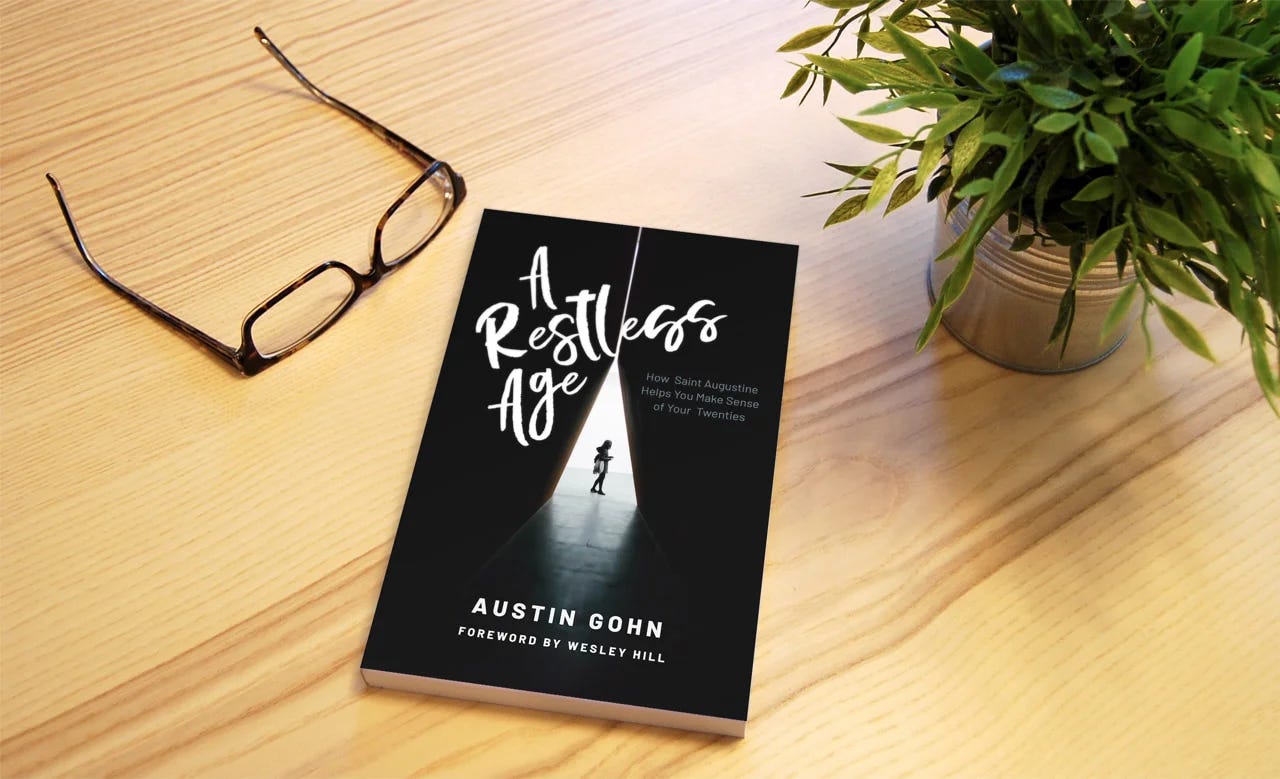
P.S. I’ve written a book all about Augustine’s Confessions for young adults. It’s called A Restless Age, and it’s all about the five searches of young adulthood: faith, habits, friendship, love, and work. One recent reviewer named Alix said that it “geniusly overlays Augustine’s crises in Confessions onto the familiar crises common to twenty-somethings in the 21st century and explains how rest found in God is the answer for us now just as it was for Augustine then.” If you’re a young adult, I wrote this book for you.
This is email 32 out of 40 in Hear from God in 40 Emails (or Less)—a Substack series designed to give you biblical and practical guidance on hearing from God in a decision that matters to you. Read this email for how to get caught up in just seven emails.
By the way, if you’ve found this email helpful, would you forward it to a friend and invite them to check out the series?
Saint Augustine of Hippo, Confessions, Book 18, Chapter 30 (Translated by Sarah Ruden).
Priscilla Shirer, Discerning the Voice of God, 130.
Dallas Willard, Hearing God, 138.