
Making Room for the Prophetic
The moment at an Airbnb in LA when I realized the power of a prophetic word and how you can make room for the prophetic in the decisions that matter most.


As part of HEAR FROM GOD IN 40 EMAILS (OR LESS), we’re in a four-part series on God’s guidance through your ADVICE—the “A” in the H.E.A.R. Framework. Read Part 1 on the two different ways God speaks through advice. Read Part 2 on how to build a Hearing God Mastermind. Read Part 3 on four best practices for Wisdom Mining.
I was at an Airbnb in Los Angeles when I realized the power of a prophetic word given at just the right time.
A few friends and I were there for a cohort called Searock, and we found a place to stay together.
Over the previous year, John Mark Comer, Jon Tyson, Dave Lomas, Todd Proctor and other founders of that cohort had shared about how they tried to meet with each other once a year to share honestly about what was happening in each of their lives and listen for how the Holy Spirit might want to encourage each other. Then, they encouraged us to do the same.
So, with In-N-Out burgers still working through digestive systems, we decided to try it ourselves right there at the Airbnb.
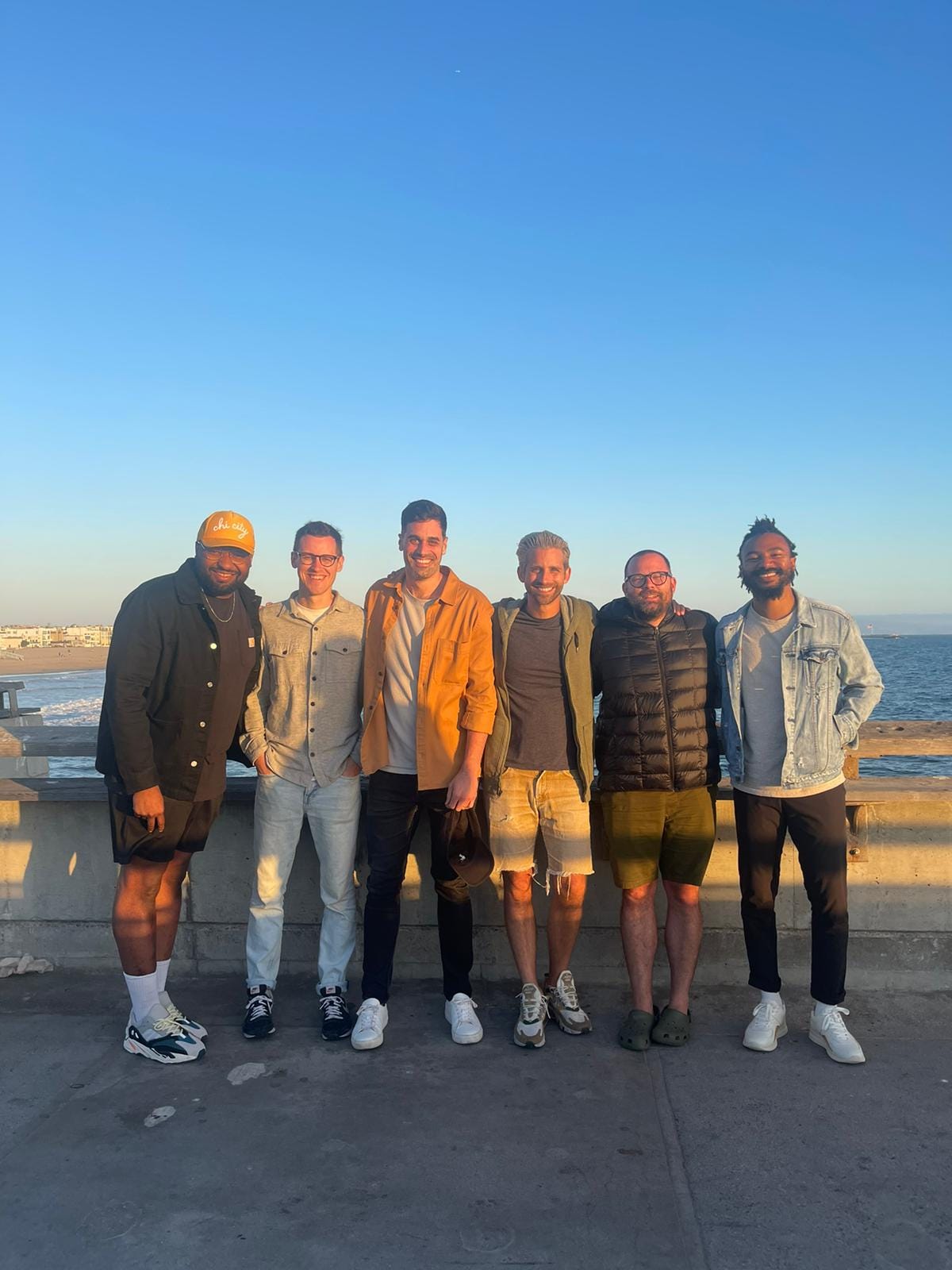
My friend Tim, the oldest of our group, facilitated it. We each took a few minutes to share a little bit about what was going on in our lives. Then, after each person shared, Tim said something like, “Let’s spend three minutes just listening to God. Then, we’ll leave space to share anything that the Holy Spirit might be saying.”
When it got to my turn, I shared what was going on in my life. I wasn’t facing any major decisions at the moment, but I was feeling discouraged. I shared how I felt like I was struggling to be a good pastor, husband, dad, and friend all at the same time and how I was feeling like a failure.
Then, we waited in silence for three minutes.
Three minutes is an awkwardly long amount of time to be alone with your thoughts. Did I just overshare? Would anyone have anything insightful to say? What if someone says something that’s just totally off?
After what felt like an hour, Tim said the three minutes was up and asked if anyone had anything to share with me, and I’ll never forget the prophetic word one of them said next.
In the rest of this email, as we close out a series on the “A” (Advice) in the H.E.A.R. Framework, I’ll share about the role PROPHETIC WORDS can sometimes play in the decisions that matter most and how you can make space for them in your life just like we did at that Airbnb in LA.
What’s Prophecy?
You might be wondering: What do you mean by “prophecy” or “prophetic word”?
Maybe, you come from a church tradition that’s skeptical of prophetic gifts and the possibility that God still speaks in that way. You might come from a church tradition that’s a bit too open to the prophetic, and you’ve had some weird experiences with prophetic words that just felt off. Or, you might be new to faith and the only category you have for prophecy is something like what happens in Harry Potter.
Sam Storms says that prophecy, from a biblical perspective, is pretty simple: “I define prophecy as the human report of a divine revelation. Prophecy is the speaking forth in merely human words of something God has spontaneously brought to mind.”1 As I shared in the opening email of this series, it’s not always or even usually a word about the future. At its best, a prophetic word is meant for the “strengthening, encouragement, and consolation” of the person it’s for (1 Corinthians 14:3).
The Apostle Peter says prophecy is something we can expect more of on this side of Pentecost (Acts 2:17), and Paul says that it’s a spiritual gift that we should all pursue (1 Corinthians 14:1). In that sense, the prophetic is meant to be commonplace in our lives, and we ought to be making room for it in our decision-making.
How Paul Made Room for the Prophetic
Not only did Paul encourage churches to make room for the prophetic, Paul made room for the prophetic in his own life—even if it meant risking the possibility that someone would get it wrong.
As we explored in a previous email about building a Hearing God Mastermind, Paul and Barnabas launched their first missionary journey from Antioch after a prophetic word he received in Acts 13:1-3. But, this wasn’t the first or last time a prophetic word would impact Paul’s decision-making.
Earlier in Acts, while Paul was living in Antioch, a man named Agabus shared a prophetic word about a famine. In response, the leadership of the church “determined” that they should send some famine relief with Paul and Barnabas (Acts 11:27-29).
Then, later in Acts, Paul encounters Agabus again while they were staying at the “house of Philip the Evangelist” (Acts 21:8-14). Agabus shares a prophetic word with Paul about how he’s going to be bound and delivered over to the Gentiles if he goes to Jerusalem. As a result, the rest of the community advised him not to go to Jerusalem.
In this case, Paul considered the prophetic word and the advice that was being given to him, but he decided to go to Jerusalem anyways. “We should also notice that Paul took their counsel very seriously,” Sam Storms writes, “even though he believed it to be misguided. He did not casually dismiss the prophetic urging, and he was willing to process the word with others.”2 He understood the nuances of revelation, interpretation, and application in any prophetic word. (For more on this, check out Sam Storm’s Practicing the Power.)
Paul made room for the prophetic—even if not every prophetic word that came his way, including prophetic words from people he trusted, was the final word for him on what he should do next.
How to Make Room for the Prophetic
How can you make room for the prophetic as you’re making decisions in your life?
You might be in a church culture where making room for the prophetic is already normal and as simple as walking up for prayer ministry as part of a Sunday service. Even if that is the case, I recommend practicing making room for the prophetic together in a small group setting with some people that you trust.
If that’s new to you, here’s a process you can try that I’ve tried with others—and, after I walk you through the process, I’ll share what my friend Austin shared with me after we tried this process together a few years ago.
1) Expect the prophetic.
God will often bring a prophetic word into your life whether or not you’re open to it, but I’ve noticed that it seems to happen more often when I’m expecting it. You can pray something like, “Lord, you said that your sons and daughter will prophesy, I’m open to and expecting a prophetic word about this decision I’m facing.” God won’t always give you a prophetic word, but God won’t fault you for having the faith to expect one.
2) Invite some people to listen for the Holy Spirit with you.
If you have a Hearing God Mastermind, start there.
As I encouraged you in a previous email, set a time to spend together in worship and prayer—listening for what the Holy Spirit might want to say to you just like Paul and Barnabas did in Acts 13:1-3 and encouraged the church to do in 1 Corinthians 14:26-32.
It might also be helpful to ask someone else to facilitate it. If you know someone who has more experience with making room for prophetic words, ask them to facilitate it. If you haven’t already, make space to share a bit more about the question you’re asking God and how you have sensed him guiding you so far.
3) Spend at least 3-5 minutes just listening to God in silence.
If you want to make room for the prophetic, that means you need to create space for some real silence. If there is no space for listening to God together, any talking that happens is likely not in the category of the prophetic.
At some point in your gathering together, the facilitator should say something like, “We want to take a few minutes to simply listen to what God might want to say through the Holy Spirit to _________. Pay attention to any Scriptures, words, or pictures that come to mind.”
Set a timer for 3-5 minutes and just wait. It should feel awkwardly long because it takes time for people to let their own thoughts settle down and pay attention to what God might want to say.

4) Press record and ask people to share.
After a few minutes of silence, the facilitator can ask, “Does anyone have something to share that might be from the Holy Spirit for ________?” Encourage people to share what comes to mind (even if it doesn’t feel relevant) but to stop short of over-interpreting what they think it means for you. Let people know that this is a safe space to take a risk and be wrong. Not everyone needs to have something to share, just a few.
One practice that I’ve found helpful here is to press record on your phone (or another device) as people are sharing. This allows you to be fully present in the moment rather than trying to take note of everything that’s being said. You can listen back later and catch anything that you missed.
5) “Weigh it, wait on it, and walk in it.”
In 1 Corinthians 14:29, Paul advises, “Two or three prophets should speak, and the others should evaluate.” Sharing is just half of the equation, then it’s up to you (and others) to evaluate what has been said. As Tyler Staton writes in The Familiar Stranger, “A discerning ear is complementary to a prophetic voice.”3
How do you do that? Pete Greig says, if you’re on the receiving end of a prophetic word, it’s up to you to “weigh it, wait on it, and walk in it.”4
“Weighing it,” at the very least, means considering whether or not it’s aligned with what the Bible says. If it’s not, you can throw it out. (The next four emails will be all about how the Bible is the most important way that God guides us in the decisions that matter most.) If it’s helpful, you can try using the “Could It Be God? Flowchart” to see if it’s at least something worth holding onto even if you’re not sure if it’s from God. The same guidelines that apply to your own thoughts apply to thoughts from other people.
“Waiting on it” is giving it time for you to process it, which means it’s okay if you’re not sure what any of the prophetic words shared might mean for you. You can share a little bit of what you might be thinking after people shared, but it might just be some of your first impressions.
Finally, if you still feel like something was a genuine word from the Holy Spirit for you after some time has passed, “walk in it”—especially if it’s backed up by some of the other parts of the H.E.A.R. Framework. In the end, whether you receive a prophetic word or not, consider the advice or Jack Deere, “Never make a decision based solely on the word of a prophet. Prophetic words are meant to support, confirm, or clarify a leading that a person already has or to get that person to pray about a course of action they hadn’t thought about.”5
—
After we waited in silence at the AirBnB in LA, one of my friends spoke up. He said something like, “Austin, I see a vision of your riding a bike but falling off. And, God is saying to you, get back on the bike.”
You might be thinking, especially if you’re skeptical, “Well, based on what you already said about what you were feeling, that’s just common wisdom. What’s prophetic about that?”
When he shared it, though, I almost immediately started tearing up.
Just a few days earlier, I had been teaching my oldest son how to ride his bike. I let go, and he was riding on his own for a moment, but he fell off. He scraped his knee, and he didn’t want to get back on the bike and try anymore. After giving him space, I walked over and knelt down and told him, “Gohn’s get back on the bike. When you’re ready, I’ll help you get back on the bike and try again.”
I hadn’t told any of them that story, but the words he shared with me were an echo of what I shared with my son.
I don’t know for sure if it was a prophetic word from the Holy Spirit or not, but I do know that after weighing it in the moment and waiting on it a few days throughout the rest of our time together, I walked in it as I stepped off the plane back into Pittsburgh.
To my subscribers: Have you had any experience (positive or negative) with a prophetic word? What questions do you have?
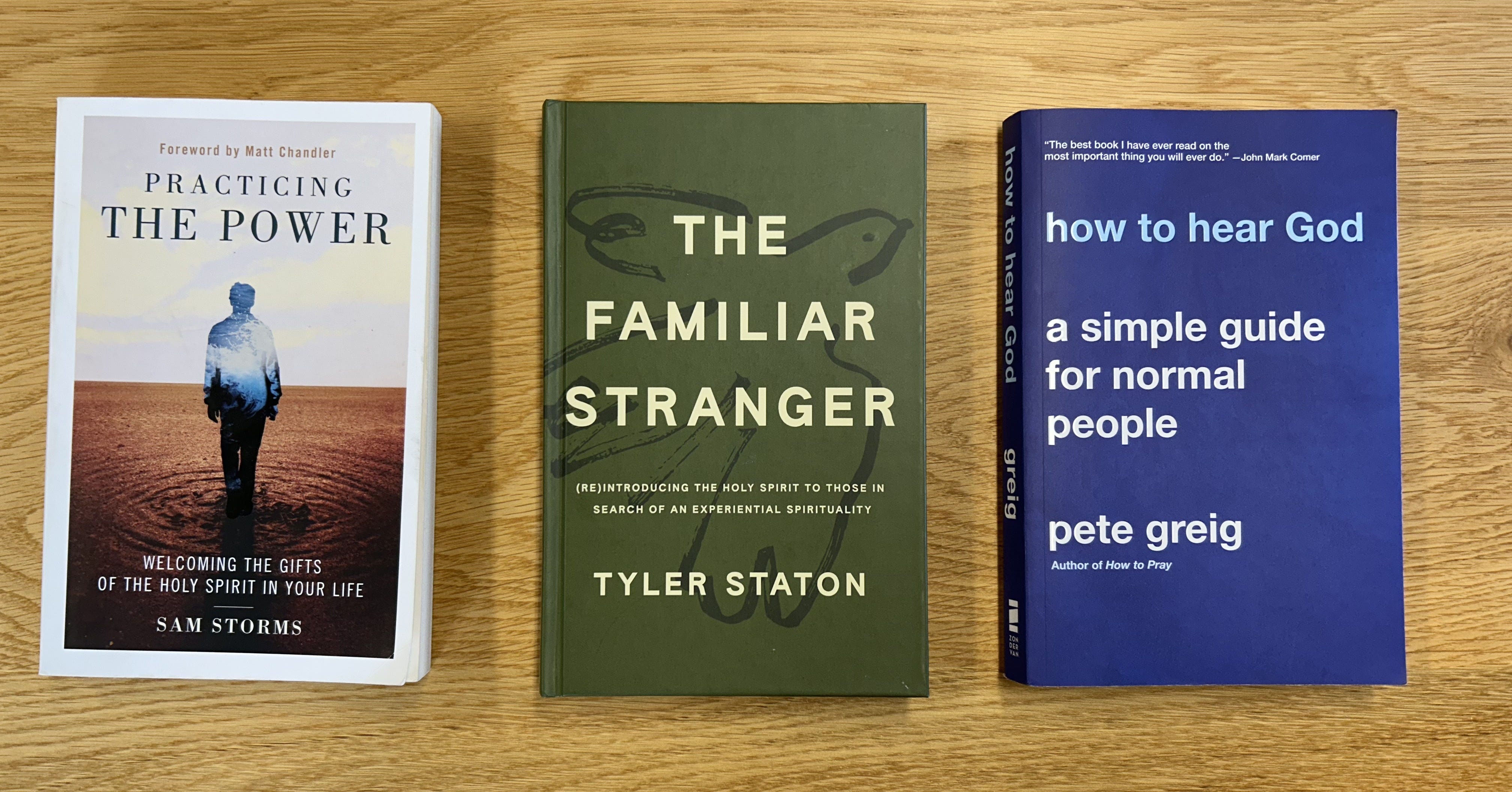
P.S. Want to know more about making room for the prophetic? Check out The Familiar Stranger (Tyler Staton), Practicing the Power (Sam Storms), or How to Hear God (Pete Greig). All three books have helpful chapters on prophecy that have all kinds of practical guidance for those of you who might have more questions.
This is email 31 out of 40 in Hear from God in 40 Emails (or Less)—a Substack series designed to give you biblical and practical guidance on hearing from God in a decision that matters to you. Read this email for how to get caught up in just seven emails.
By the way, if you’ve found this email helpful, would you forward it to a friend and invite them to check out the series?
Sam Storms, Practicing the Power, 82.
Sam Storms, Practicing the Power, (?).
Tyler Staton, The Familiar Stranger, 128.
Pete Greig, How to Hear God, 131-134.
Jack Deere, Why I Am Still Surprised by the Voice of God, 265.
Bro! I know Austin Wofford! Stoked that you journeyed with him and his wife on that cohort
Well said, Austin! I forget how exactly he said it, but I love the part in the Familiar Stranger when Staton says how more skeptical traditions (like mine) still speak prophetic words they just don't call it that. Instead, we say something like "I feel like God wants me to tell you...". We get so wigged out by that term "prophecy" sometimes which is funny given the way Paul talks about it. I find that most people in the churches I have been a part of are not great at the making space/being silent part. It can feel like a lot of rattling off thoughts and opinions (which are usually very broad ideas) within a conversation with little silence or breathing room. What a gift it would be to the church if we made this practice commonplace in our lives!