
When God Nudges You
The moment Paul didn't feel right about a decision, the saint who got hit by a cannonball, and the careful practice of paying attention to what God might be saying through your emotions.


As part of HEAR FROM GOD IN 40 EMAILS (OR LESS), we’re in a four-part series on experiencing God’s guidance in your heart—the “H” in the H.E.A.R. Framework. Read Part 1 on four ways God speaks through the heart, Part 2 on the power of creating monastic moments in your life, and Part 3 on the three questions that form the “Could It Be God?” Flowchart.
In the film version of Harry Potter and the Half Blood Prince, there’s a scene when Harry Potter drinks a vial of a substance called Felix Felicis—also known as “Liquid Luck.”
After he gulps it down, his friend Hermione asks him, “Well, how do you feel?”
Harry says, “Excellent—really excellent.”
They had made a plan, before he drank on the vial, on how they were going to accomplish an important task. After drinking it, though, he changes the plan and says he needs to go to Hagrid’s hut. When Hermione tries to argue, he says, “I know but I’ve got a really good feeling about Hagrid’s. I feel it’s the place to be tonight.”
Harry can’t put it into words, but he has an inner sense about what he’s supposed to do next—even if it means changing course. You could say he gets a “nudge” in the direction that he’s supposed to go.

We’ve been exploring how God speaks to you from within—in particular, through your thoughts. But, sometimes, when you’re listening for God’s voice in a decision, he’ll guide you with an internal nudge, not with your thoughts but with your emotions. It’s gut-level guidance, and it’s what someone might be feeling when they say thing like:
“I don’t feel at peace about it.”
“Something just feels off about this.”
“I feel like I’m supposed to do this, but I’m not sure why.”
To borrow a memorable phrase from David Benner, commenting on a concept from Saint Ignatius of Loyola that we’ll explore more in a moment, it’s guidance by way of a “divine nudge.”1
A DIVINE NUDGE is nothing more than God’s subtle, gut-level guidance through your general emotional state. It’s when God leverages your emotional life to clue you into how he might be leading you in whatever decision you’re facing. Saint Paul would describe a divine nudge as feeling a sense of rest or unrest in his spirit, Ignatius of Loyola would call it a feeling of consolation or desolation, and a modern psychologist might just call it the feelings associated with a positive or negative “core affect.”
You don’t need a vial of Liquid Luck in order to experience a divine nudge, just the Holy Spirit living within you. But, just because you feel emotionally “at peace” about a decision doesn’t mean that’s how God is nudging you.
At the end of this post, I’ll share a three-step practice you can try this week that can help you pay attention to how God might be nudging you and some tips to help you avoid misreading God’s gut-level guidance.
The Moment Saint Paul Didn’t Feel Right About Something
[Edit: In a previous version of this post, I accidentally combined an episode from Paul’s second and third missionary journeys that I have since corrected.]
Saint Paul’s church-planting journeys across the Mediterranean world were clearly a combination of deliberate strategy and Spirit-led guidance. N.T Wright, a scholar who has studied the life of Paul more than just about anyone else, says that if you read about Paul’s life you’ll have to conclude that this was a man who was attuned to God’s leading through the Holy Spirit.2
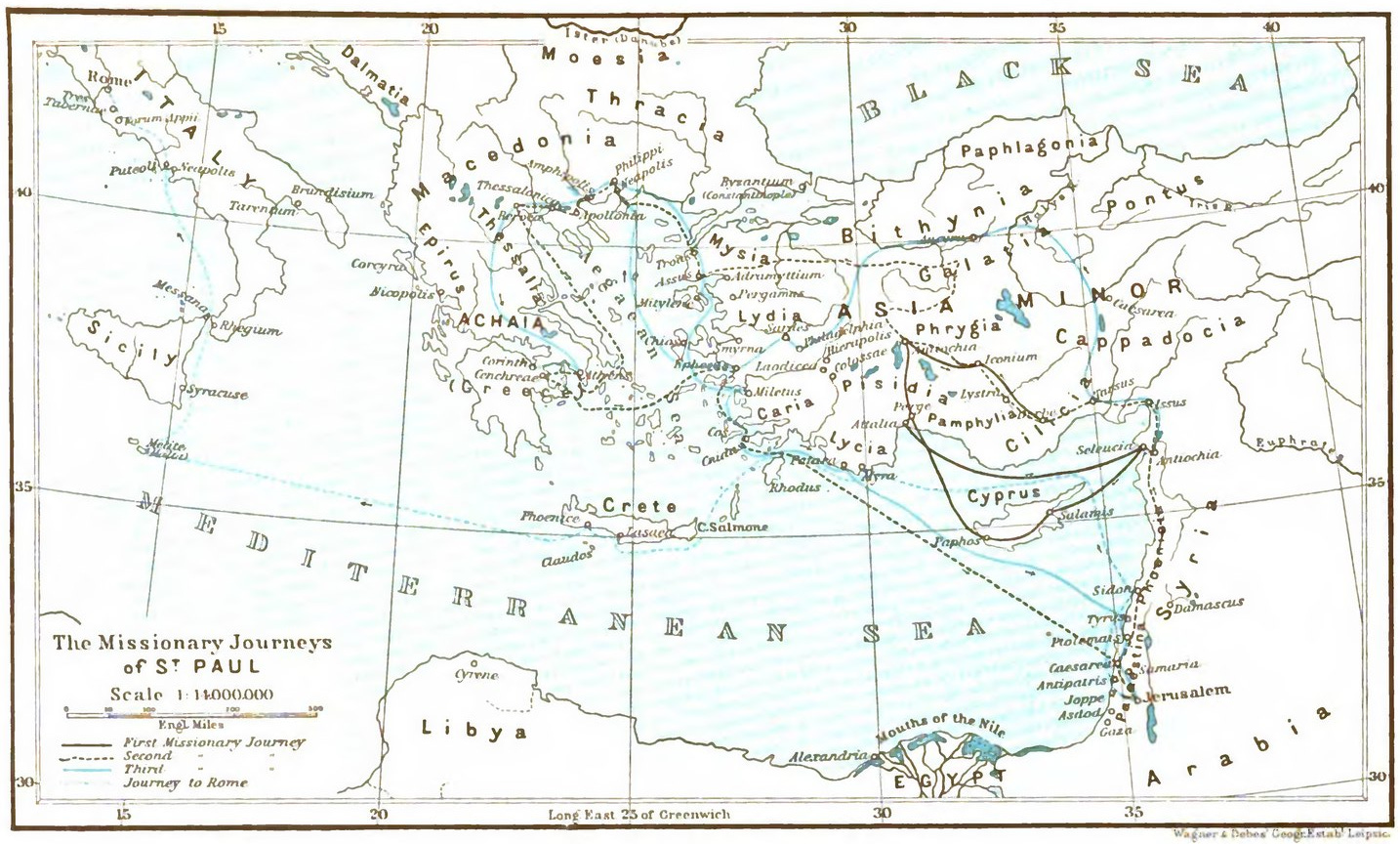
Looking back on his third missionary journey, in particular, Paul highlights his emotional and spiritual state while he was in Troas in a letter to the church in Corinth. He says, “When I came to Troas to preach the gospel of Christ, even though the Lord opened a door for me, I had no rest in my spirit because I did not find my brother Titus. Instead, I said good-bye to them and left for Macedonia” (2 Corinthians 2:12-13). While it seemed as if God had “opened a door” for him in Troas, something still didn’t feel right about it at a gut-level.
Even a wide open door isn’t always a clear word from God saying, “Walk through it.”
Paul’s use of the word “spirit” here, like the word “heart,” is another way of talking about your internal world. After literally walking around in the decision to go to Troas, there was something that didn’t feel right about it. For Paul, “unrest in his spirit” was a divine nudge that it was time to move on to Macedonia.
When Paul arrives in Macedonia, though, he still doesn’t feel a sense of “rest” in his spirit. He says, “In fact, when we came to Macedonia, we had no rest. Instead, we were troubled in every way: conflicts on the outside, fears within. But God, who comforts the downcast, comforted us by the arrival of Titus…” (2 Corinthians 7:5-6). In other words, if Paul had been guided by his emotional state alone, he might have left Macedonia, too. But, God “comforted” him by sending him his friend Titus.
Even though it was a challenging decision to stay in Macedonia, Paul stays partly because he experiences rest in his spirit or, as this verse says, “comfort” about the decision. On its own, it’s not always clear what God might be trying to tell you through your emotional state, but when combined with some of the other ways that God guides, it can start to come into focus.
And, it’s a way of experiencing God’s guidance that would be popularized over a thousand years later by a saint who got hit by a cannonball.
The Saint Who Got Hit by a Cannonball
What Paul calls the feeling of rest or unrest, Saint Ignatius of Loyola calls the state of “desolation” or “consolation”—language that’s similar to what Paul uses in 2 Corinthians 7:6.
Ignatius lived in Spain in the 1500s, and he had made the decision to pursue military life throughout young adulthood. Then, in 1521 at the Battle of Pamplona, he had an experience that changed the course of his life: a cannonball broke his leg. Stuck in the bed recovering for the next year, Ignatius got bored of his normal reading and started reading about Jesus. Through the combination of God’s inner prompting in solitude and reading about Jesus, Ignatius left military life and eventually founded a new monastic order.
At one point in his journey, Ignatius wrote what has become known as The Spiritual Exercises.3 While I’ve never worked through the exercises, I’ve known people who have—including Tim, one of my readers, who I spoke with just a few weeks ago. (His advice: “Don’t do them alone. Invite someone more experienced to guide you through them.”)
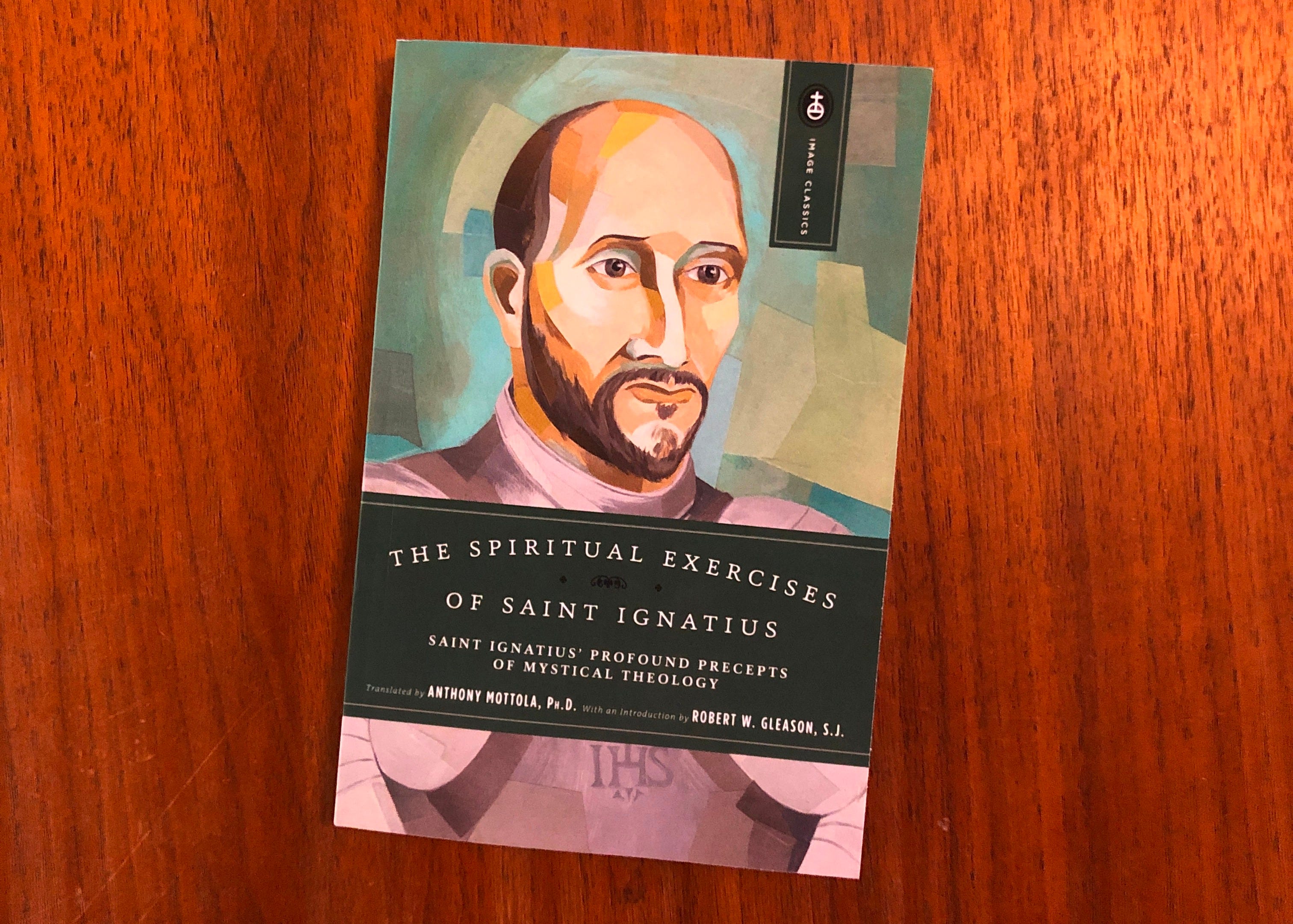
In his “Rules for the Discernment of Spirits,” which is basically his guidance for how to know if that thought is from God or not, Ignatius highlights the role that your emotional state can play in hearing God’s voice. He uses the words consolation and desolation to describe the interior movements or feelings we experience related to a decision. Consolation is similar to “comfort” Paul experienced in Macedonia while desolation is more like the “unrest” he felt in his spirit when he was in Troas.
David Benner, commenting on desolation in particular, says, "Desolation is at these times a divine nudge toward awareness that there is something not right for me in what I am considering, at least not right for me at the present moment."4 Later, Benner calls it “spiritual turbulence” that’s meant to wake you up to the possibility that this might not be the right decision.5
Ignatius is taking what Paul understood intuitively and turning it into a framework that can help you pay attention to the way your emotional state might be God’s way of trying to tell you something about the decision you’re facing. But, it’s not always easy to interpret what God might be trying to say through what feels like a divine nudge.
How to Pay Attention to Divine Nudges
Again, in light of Paul and Saint Ignatius, a DIVINE NUDGE is God’s subtle, gut-level guidance through your general emotional state.
These divine nudges can be easy to miss unless you create space in your life to pay attention to what’s happening in you emotionally as you work through different options for what you should do. You can do this by creating monastic moments through solitude and silence and by meeting with a trusted friend, pastor, or professional who can listen to you and help you make sense of what you’re feeling.
If you’re working through the H.E.A.R. Framework, a helpful exercise for paying attention to divine nudges can look like holding some of the options before God in prayer and doing the following three steps:
1) Ask God to give you a “divine nudge” about an option.
You can say something like, “God, you gave Paul unrest in his spirit when he was facing a decision about one of the options before him. As I’m listening for your guidance, can you do the same for me?” You can also ask God, more positively, to give you comfort about one of your options through the Holy Spirit, who is literally called “the comforter” (John 14:26). God might already be giving you a nudge, you just haven’t noticed.
2) Walk around in the different options imaginatively.
Paul literally walked around in Troas, one of his options for where to preach the gospel, but you can walk around in an imaginative Troas. Take time with each of the options, maybe over the course of a week, and imagine with the help of the Holy Spirit what choosing a few different options could be like.
3) Name your general (and granular) emotional state.
As you’re walking through different options, try to give words to what you’re feeling. In Untangle Your Emotions, Jennie Allen suggests starting generally with “okay or not okay” but working toward increasing “emotional granularity,” which means finding specific words to name what you’re feeling.6 As you consider each option, you’re considering whether God might giving you a feeling of rest or unrest, consolation or desolation, “okay or not okay.”
Beware, though, of the tendency toward impact bias, which says that you’re not very good at estimating how you will feel about something in the future. That’s why this exercise is less about predicting the emotions you’ll feel after you make a decision and more about inviting God to speak through your emotions before you make a decision.
—
Then, write down what you noticed in your Ubiquitous Listening Tool. You might do this intentionally over the course of a day or even a week, but it’s also important to realize that divine nudges come when you aren’t looking for them.
On their own, though, divine nudges aren’t everything. They don’t operate in a silo from the other ways God speaks, and the Enemy can hijack your emotional state.
Divine nudges are best considered in light of the other ways God might be guiding you through the H.E.A.R. Framework, especially since it’s always possible that what you’re calling “desolation” or “unrest” might be nothing more than a bad night of sleep, a false sense of psychological dread, or just a fear of the inevitable hardship that might come with a particular decision. And, what you’re imagining is “peace” about one of the options might also be nothing more than you proclaiming peace where there is no peace in order to make yourself feel better and shut down anyone who says you’re making the wrong decision.
At their best, though, divine nudges are an invitation to ask yourself, in the words of Priscilla Shirer, “Am I sensing a ‘green light’ in my spirit? Am I confident and at peace about moving forward, even if I don’t like what I’m being compelled to do? Or do I instead feel restless and unsteady, unsure about what these directions are telling me?”7
I’d love to hear from you: Have you ever experienced “unrest in your spirit” like Paul describes or “at peace” about a decision?
This is email 23 out of 40 in Hear From God in 40 Emails (Or Less)—a Substack series designed to give you biblical and practical guidance on hearing from God in a decision that matters to you. Start with the first email.
David Benner, Desiring God’s Will, 103.
N.T. Wright, Paul, 93.
There’s many editions, but I use The Spiritual Exercises of Saint Ignatius, translated by Anthony Mottola, New York: Image, 2014.
David Benner, Desiring God’s Will, 103.
David Benner, Desiring God’s Will, 108.
Jennie Allen, Untangle Your Emotions, 161.
Priscilla Shirer, Discerning the Voice of God, 109.